
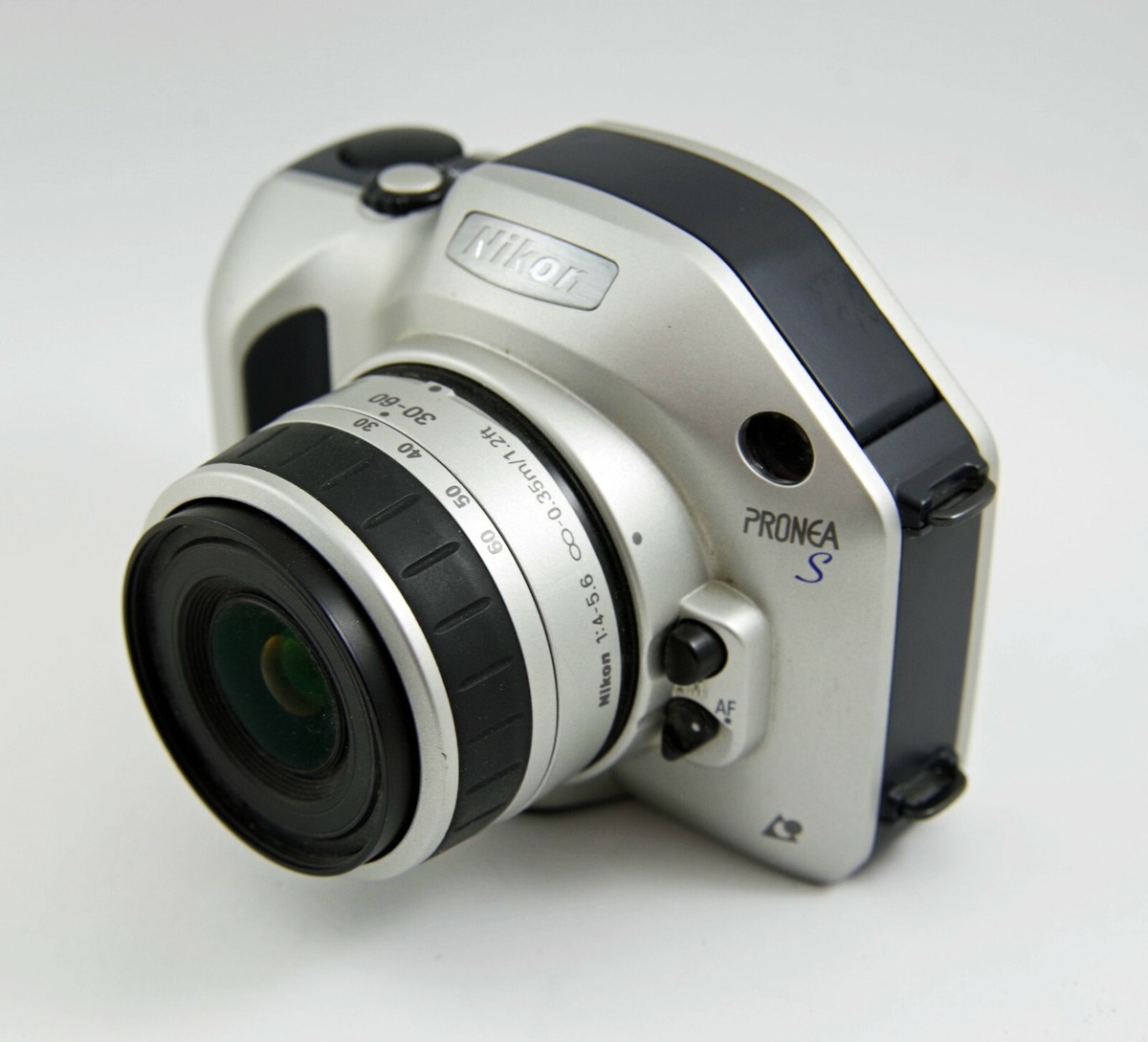
Nikon Cameras Pronea S
1998
The Nikon Pronea S is an autofocus Single-Lens Reflex (SLR) film camera that uses the short-lived Advanced Photo System (APS) film format and was introduced in 1998. Marketed as a small, light, and innovative SLR primarily for the casual snapshooter, it can use a wide range of AF Nikkor lenses, in addition to dedicated IX-Nikkor lenses.
User & Expert Opinions
Praise: Reviewers often highlight its compact, lightweight, and ergonomic design, which made it popular as the world's smallest and lightest SLR at the time of its launch in 1998. Users appreciate its compatibility with existing F-mount Nikkor lenses and the flexibility offered by the APS format's various print options and data recording features. Many find it simple to use, yet flexible enough for creative control.
Criticism: The camera's main limitation is the obsolescence and scarcity of APS film and processing services today. Some users experienced reliability issues, such as a weak battery compartment door or electronic malfunctions. The image quality is generally considered adequate for standard prints (like 4x6 or 5x7), but not as high quality as 35mm film due to the smaller film size.